Department overview
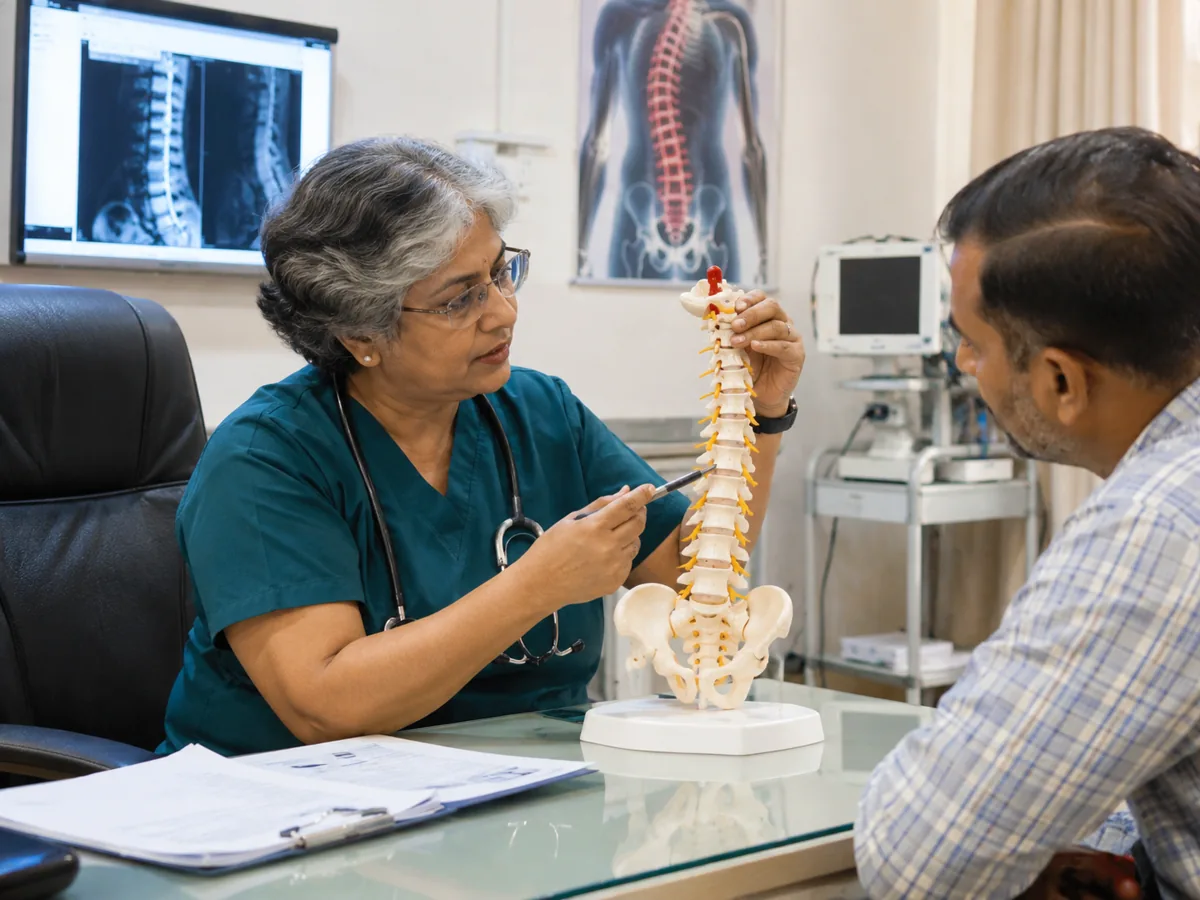
Brain and spinal conditions can require careful evaluation and coordination. Bhaskar Hospital lists neurological and neurosurgical care among its departments, including assessment for head injury, spinal problems and other nervous-system conditions.
Because symptoms and urgency vary widely, the appropriate assessment and specialist availability should be confirmed directly with the hospital team.
Care and services include
Headaches, weakness, persistent back pain or a suspected neurological problem can raise urgent questions. Brain and spine symptoms are not all surgical: the priority is to recognize emergencies, identify the cause and reach the appropriate clinician.
Symptoms that should not wait
Sudden facial drooping, one-sided weakness, difficulty speaking, a first seizure, new confusion or a severe head injury require emergency medical attention. New loss of bladder or bowel control with back pain, or weakness rapidly worsening in the legs, is also urgent.
- Sudden stroke-like symptoms
- Loss of consciousness or seizures
- Head injury with worsening symptoms
- Back pain with new significant weakness or bladder changes
How a brain or spine problem is assessed
A consultation starts with the timeline of symptoms, neurological examination, medicines and any previous reports. CT, MRI or other investigations may be considered when clinically indicated; ask which tests are available at the hospital or where you may be referred.
A diagnosis may lead to medication, rehabilitation, further assessment or discussion of surgery. Not every disc problem or headache requires an operation.
Understanding treatment choices and risks
For a proposed procedure, ask what condition is being treated, whether surgery is urgent, which symptoms it is expected to improve and what may not recover. Discuss complications, anaesthesia, admission, rehabilitation and who will review you afterward.
- Why is this treatment needed now?
- What happens if I wait or try other care?
- Which risks are relevant to my condition and general health?
- What warning signs mean I should return urgently?
Making a productive specialist visit
Bring past scans and their written reports, a medicines list and a clear history of the first symptom and how it changed. Ask the hospital in advance which brain/spine specialist is available on the day you plan to visit.
Before your consultation
These questions and preparations can help you make the most of your visit.
- Describe the exact symptom and when it began
- Take previous scans and discharge summaries
- Confirm whether a neurosurgeon or other specialist is appropriate
- Clarify follow-up and emergency warning signs
Common questions
Does a slipped disc always need surgery?
No. Treatment depends on the neurological findings, degree of compression, pain, function and response to other care.
Should I book online for sudden weakness?
No. Sudden weakness or speech difficulty is an emergency; seek immediate emergency medical assistance.
Can I come with an old MRI?
Yes. Bring the report and images so the clinician can decide whether further investigation is required.
Is every severe headache a brain tumour?
No. Headaches have many causes; a clinician can assess concerning symptoms and decide on next steps.
This information is general. Your treating clinician can discuss the diagnosis, available services and treatment suitable for your circumstances.