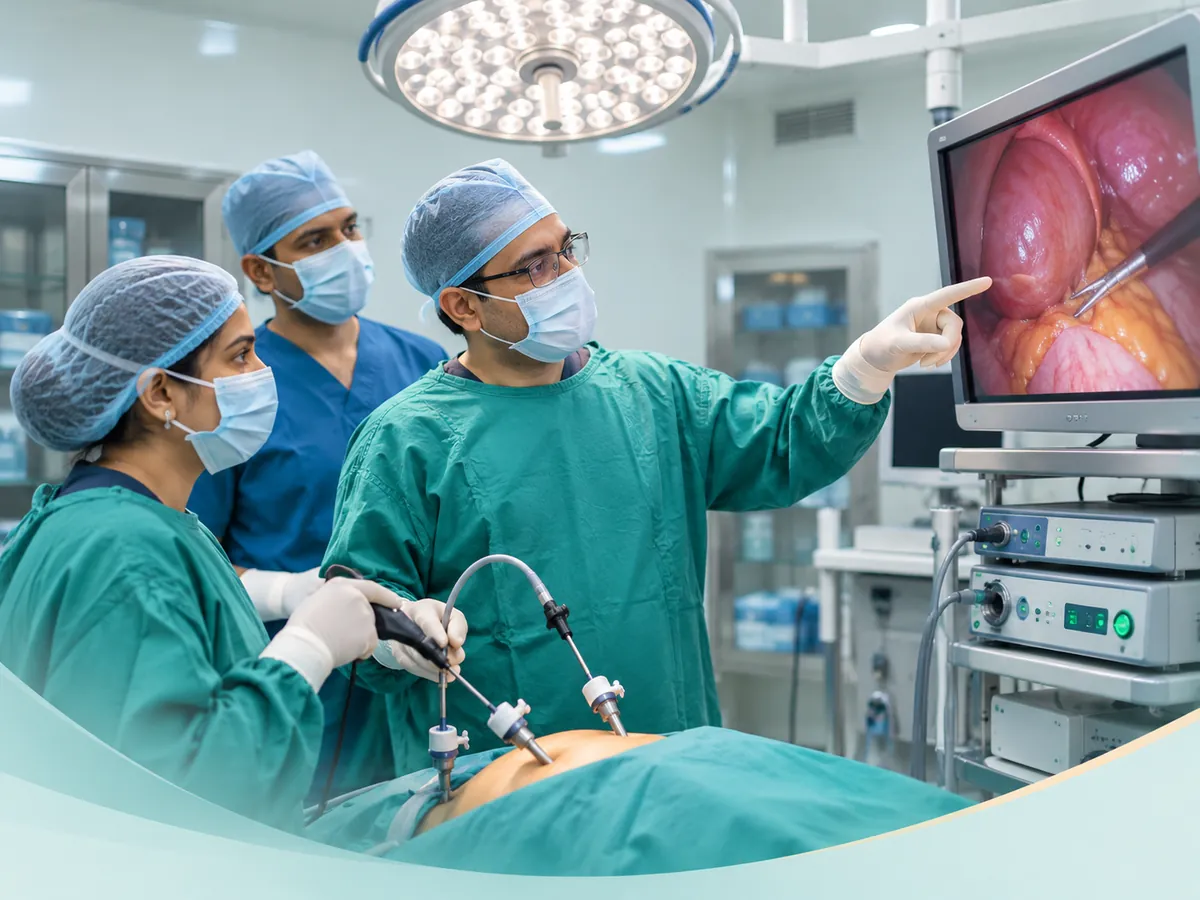
Department overview
Laparoscopy and endoscopy use specialized instruments and cameras to examine or treat certain medical conditions.
Bhaskar Hospital lists both services. Whether a procedure is appropriate depends on the clinician’s assessment, your medical condition and available facilities.
Care and services include
The terms laparoscopy and endoscopy sound similar but refer to different ways of seeing inside the body. The right investigation or operation depends on the condition, and a useful consultation explains why a camera-based procedure is proposed rather than simply listing it.
What the procedures mean
Endoscopy uses a flexible or rigid instrument with a camera to inspect an internal area, such as the digestive tract, depending on the procedure. Laparoscopy typically uses small abdominal incisions to examine or operate inside the abdomen. They have different preparations, sedation or anaesthesia needs and recovery plans.
When a clinician may recommend one
A doctor may discuss a camera-assisted procedure for symptoms that need further investigation or a condition that may benefit from minimally invasive surgery. A referral should name the intended procedure and the clinical reason.
- What question is the procedure intended to answer?
- Are other tests or treatments reasonable first?
- Will a biopsy or additional treatment be possible or needed?
- Is the named procedure available on the proposed date?
Preparation, anaesthesia and recovery
Instructions differ significantly by procedure. Fasting, medicines, allergies, previous operations and an escort home may be relevant. Ask for written preparation instructions and whether you should stop or continue any medication—do not change prescribed medicines on your own.
Recovery after a diagnostic endoscopy can be different from recovery after laparoscopic surgery. Clarify expected observation, pain, activity limits and follow-up before consent.
Benefits, limits and complications
Discuss bleeding, infection, sedation-related effects, injury to surrounding tissue and the possibility of an incomplete or alternative procedure where relevant. Your treating clinician should describe the risks specific to your health and the proposed intervention.
Before your consultation
These questions and preparations can help you make the most of your visit.
- Ask for the exact procedure name
- Confirm preparation and fasting instructions
- Tell the team about medicines and allergies
- Ask when results and follow-up will be available
Common questions
Is laparoscopy the same as endoscopy?
No. They use cameras but involve different routes, purposes and preparation. Ask which procedure is being recommended.
Do I need to stop medicines before an endoscopy?
Only follow written instructions from your treating team. Some medicines need special planning; do not stop them without medical advice.
Can all procedures be done as day care?
No. Observation and admission needs vary by procedure, anaesthesia and clinical condition.
What if I have worsening pain or bleeding afterward?
Follow the discharge warning signs and seek urgent medical attention when concerning symptoms occur.
This information is general. Your treating clinician can discuss the diagnosis, available services and treatment suitable for your circumstances.